|
|
Where are they now ?
Bob Hanscom looks at the progress of some
former, and future, junior stars ...
 In
thinking back to one of my most memorable
world-class refereeing assignments, the
1998 Men's World Junior Championships
hosted at Princeton University, I wondered
just how many World Junior and British
Junior Open champions are still active in
the game or related professions. In
thinking back to one of my most memorable
world-class refereeing assignments, the
1998 Men's World Junior Championships
hosted at Princeton University, I wondered
just how many World Junior and British
Junior Open champions are still active in
the game or related professions.
We all know that making it BIG in the world
of professional squash is not only
difficult, but because those at the top are
SO good, one must be patient while
accumulating ranking points, hopefully
resulting in climbing that long ladder to
the top echelon of professional squash. |


 |
Greats from the past
 Going
back to 1980 and 1981, when the World Junior
Championship was first held, (every two
years only) it was Chris Dittmar of
Australia placing second both years, but
winning the British in 1981 and 1982. Since
retiring as a professional player, Dittmar
has worked as a sports commentator for
Australia's Channel Seven and as an
Australian Football League commentator for
Adelaide AM Radio station FIVEaa. He also
regularly hosts the FIVEaa soccer show on
Sunday evenings. Dittmar suffered a small
brain haemorrhage requiring hospitalization
in July of 2009, but is fine now. Going
back to 1980 and 1981, when the World Junior
Championship was first held, (every two
years only) it was Chris Dittmar of
Australia placing second both years, but
winning the British in 1981 and 1982. Since
retiring as a professional player, Dittmar
has worked as a sports commentator for
Australia's Channel Seven and as an
Australian Football League commentator for
Adelaide AM Radio station FIVEaa. He also
regularly hosts the FIVEaa soccer show on
Sunday evenings. Dittmar suffered a small
brain haemorrhage requiring hospitalization
in July of 2009, but is fine now.
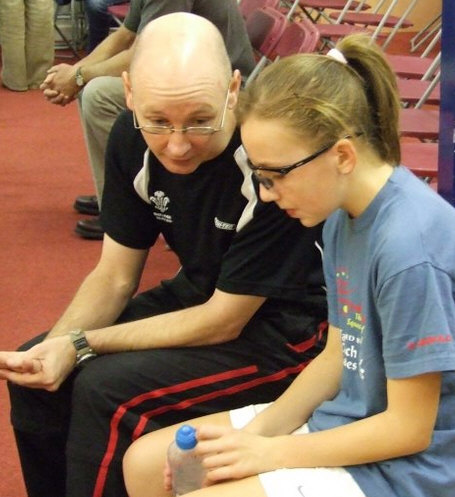
Among others still active in the squash
community is Chris Robertson of
Australia, who won the world juniors in
1984, retired from the professional circuit
in 1992 (hip problems, eventually requiring
hip replacement) and was appointed as the
national coach of Wales in 1994. He has just
recently taken over the reigns as national
coach of England.
In 1986, (at age 17) the great Jansher
Khan came onto the scene, winning the
world juniors, followed by eight World and
six British Open titles before officially
retiring (bad knees) from squash in 2001. He
won a total of 99 professional titles and
was ranked as the #1 player in the world for
over six years. Jansher has (just this past
week), been appointed as Pakistan's national
coach.
Other World and British Junior Champions
reaching the world's top ten include
England's Del Harris (World 1988,
British 1985-1988, Simon Parke (World
1990, British 1989 and 1981), now
retired from active duty, and Egypt's
Ahmed Barada (both in 1994) who is still
pursuing a successful acting and singing
career in his homeland. |
Still playing ...
World junior champions still active as tour
players are Ong Beng Hee of Malaysia,
who took the World and British Junior titles
in 1998, overcoming Wael El Hindi of
Egypt in a tough four game match - 12 years
ago! Both Beng Hee and El Hindi are still
active on the PSA tour, world-ranked at #18
and #12 respectively. In 1999 Beng Hee
reached the British Junior final again, but
was ill on finals day giving the title to
England's Nick Matthew.
That brings us to the year 2000, where the
current crop of former World and British
junior champions are now pretty-much
dominating the professional senior circuit.
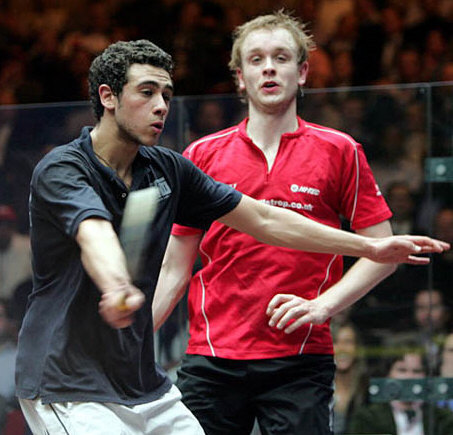
In 2000, Karim Darwish of Egypt won
both World and British titles, (Greg
Gaultier of France was runner-up in the
Worlds then won the British in 2001)
followed by James Willstrop of
England winning both in 2002 (Peter
Barker was runner-up in both finals),
Ramy Ashour of Egypt winning the Worlds
in 2004 and the Worlds and British in 2006.
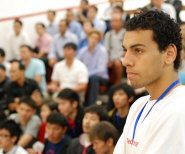 The
Egyptian dominance really started to take
hold here, as Ashour was succeeded as world
champion by Mohamad El Shorbagy in
2008 and (the event now held every year)
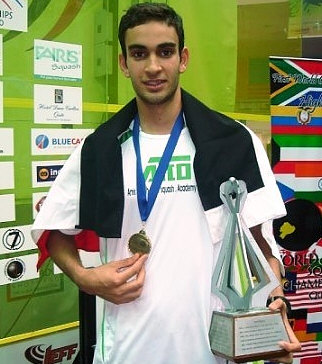
2009, Amr Khaled Khalifa of Egypt
winning in 2010. In the British, Omar
Mosaad took the title in 2007 before
Shorbagy took three in a row from 2008 to
2010. The
Egyptian dominance really started to take
hold here, as Ashour was succeeded as world
champion by Mohamad El Shorbagy in
2008 and (the event now held every year)
2009, Amr Khaled Khalifa of Egypt
winning in 2010. In the British, Omar
Mosaad took the title in 2007 before
Shorbagy took three in a row from 2008 to
2010.
The players mentioned in the last three
paragraphs currently occupy the #1, #2, #3,
#4, #5, #8, #10, #12, #17, #18 places in the
world rankings, so although it's not a
guaranteed route to the top, and it may take
a few years, winning the World and/or
British Junior titles is a good sign for
your future prospects. |
To
the Ladies ...
We must also give mention to the former and
current women world junior champions still
active as well.
Beginning with Sarah Fitz-Gerald of
Australia, she won the world juniors in
1987, and came out of retirement to help
Australia regain the World Team title last
month.
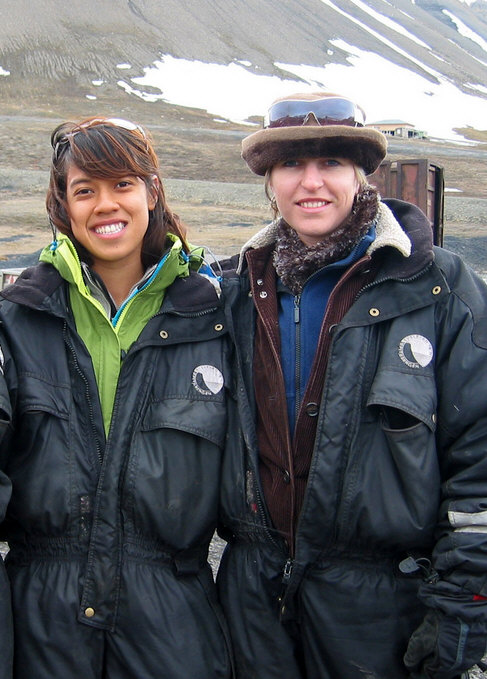
Nicol David of Malaysia won the world
juniors in 1999 and 2001 and the British in
2000 and has dominated the women's game for
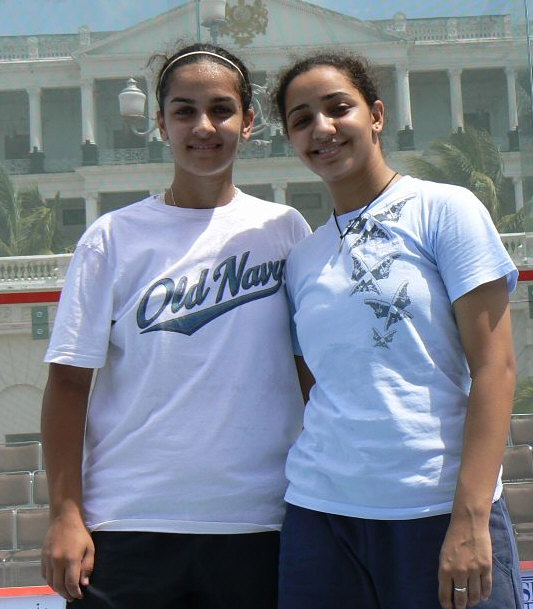
the last five years. Egyptians Omneya
Abdel Kawy and Raneem El Weleily
both won both titles and are spearheading
Egypt's women's challenge.
Then there's the seemingly ever-present
Rachael Grinham of Australia (trains in
Egypt) who was the World Junior Champion in
1993, (17 years ago) won the World Open in
2007, and the British Open in 2003, 2004 and
2007. She reached the World #1 ranking in
2004 and is still ranked as the world's #5
female player.
Egypt's Nour El Sherbini won the
world title in 2009 at the age of 13 and won
the British this year at just 14. Amanda
Sobhy, of the United States (first time
ever for an American) followed her as world
champion and is top seed for next year's
British, while Nour El Tayeb was
runner up to both in their World finals and
has several younger-age British titles to
her name. All are shooting rapidly up the
world rankings. |
The
future ...
So ... what does the year 2011 and beyond
hold for these (and future) World and
British Junior Champions? To be sure,
competing in world level junior competitions
provides the training-ground for becoming
our next world senior open champions.
And for most, if not all - there are many
junior champions who never made it in the
senior ranks - it will take patience, time,
hard work ... and perhaps a little luck
along the way in achieving the goal of
becoming one of the best!

|
|
|
|