|
|
|
 EN BREF
#5 EN BREF
#5
Everything you never knew you needed to know about the World
Teams ... |

SCOTLAND
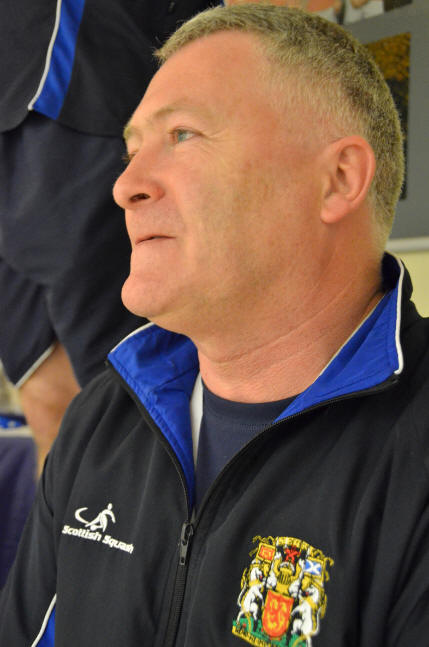
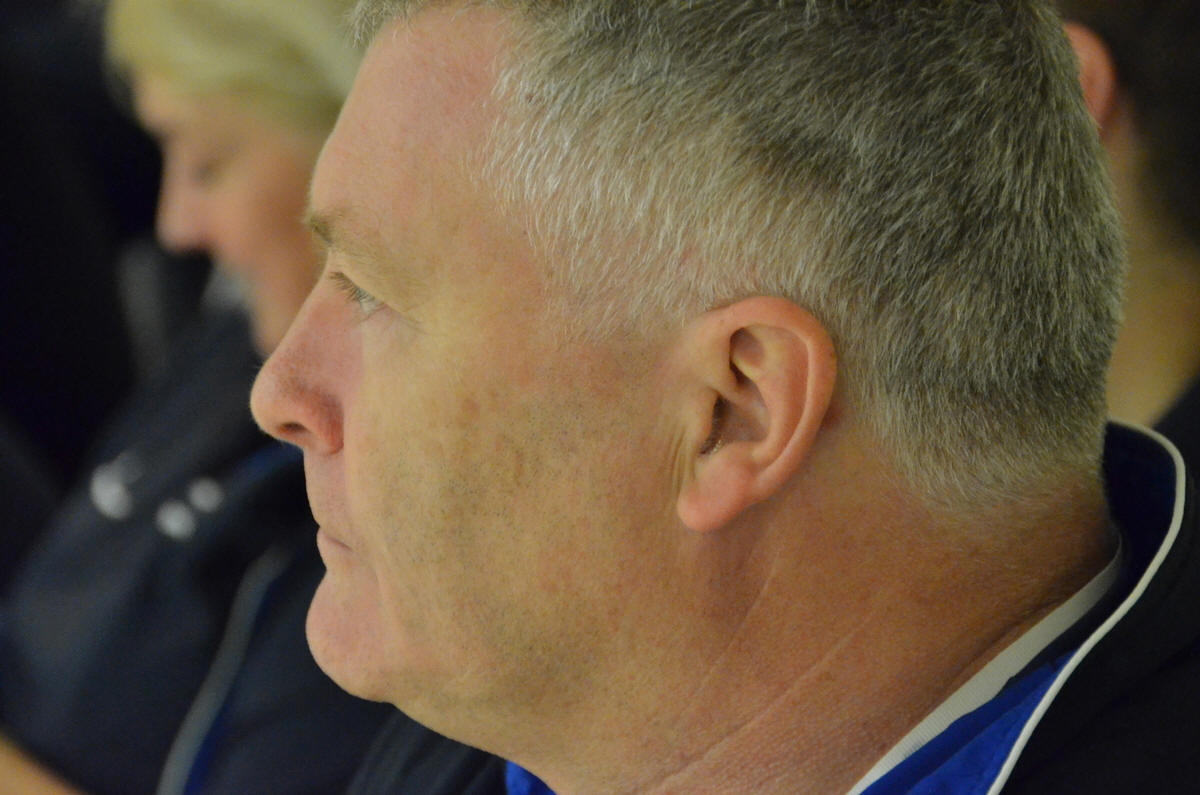
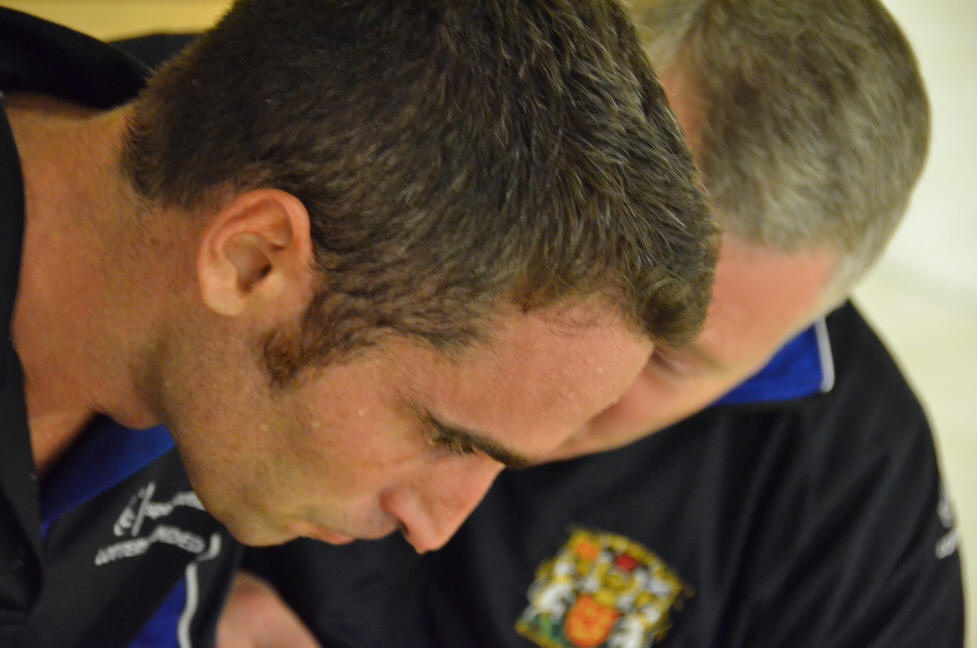
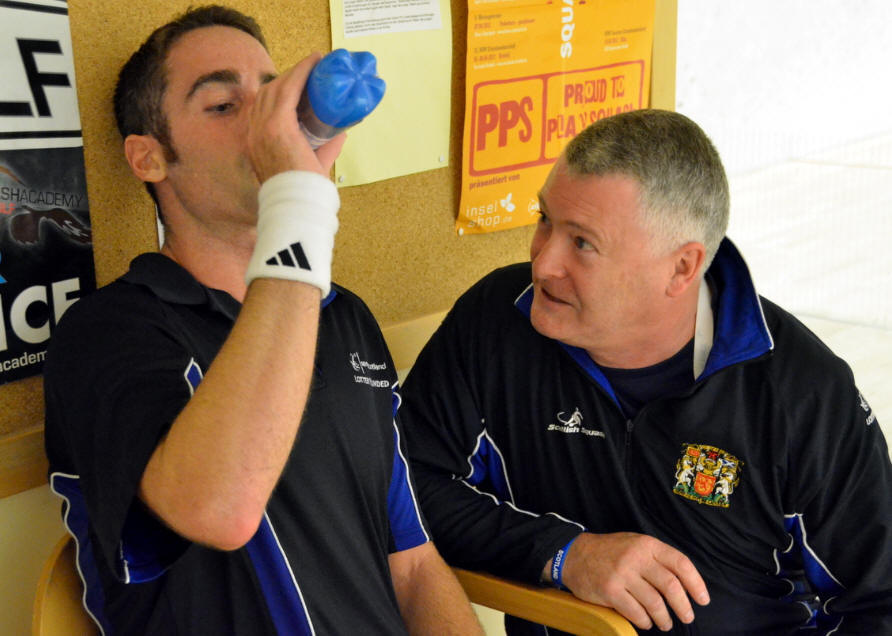
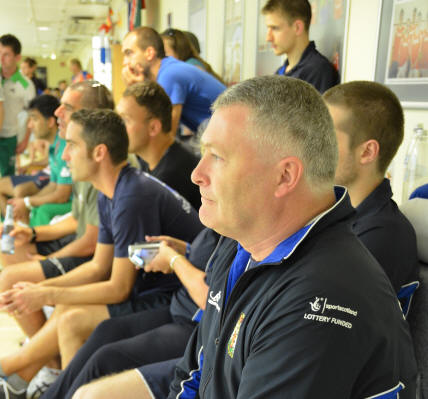
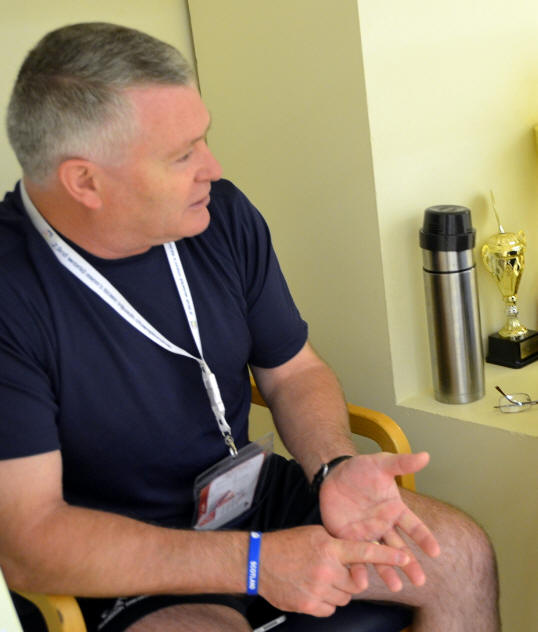
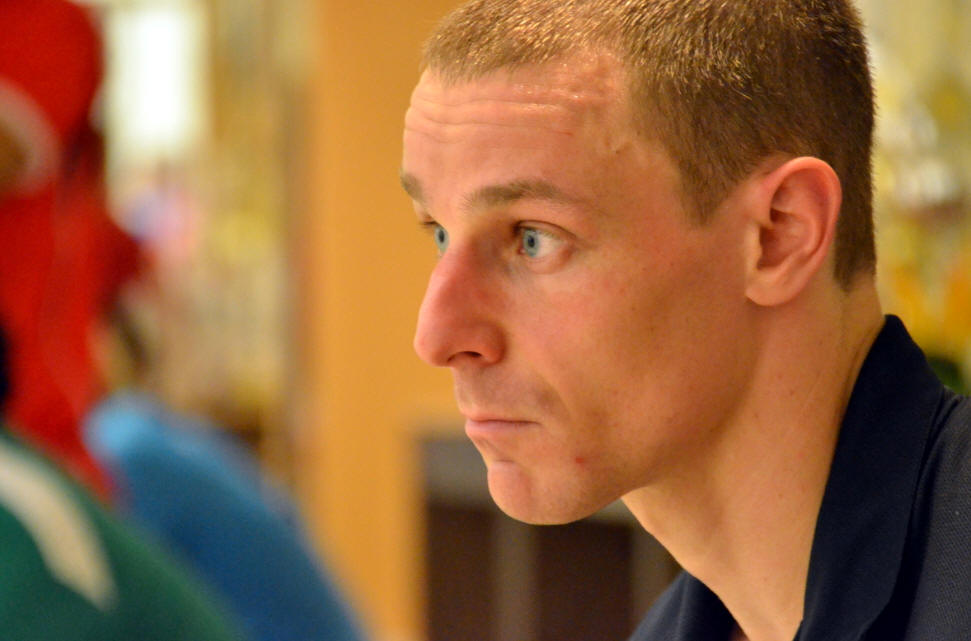
Meet Roger Flynn
"The more I learn, the more I realise the less I know" sang
Barbra Streisand in Yentl. Well, that’s exactly the feeling that
overwhelms me every time I cover a tournament, and discover that
I know so little about the world of squash.
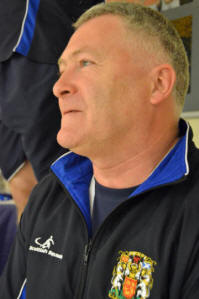 For
example, did you know that Roger Flynn, Irish origins,
born in England, raised in Australia, and Scottish National
Coach since October 2006, was Sarah Fitz-Gerald and Anthony Hill's
coach? For
example, did you know that Roger Flynn, Irish origins,
born in England, raised in Australia, and Scottish National
Coach since October 2006, was Sarah Fitz-Gerald and Anthony Hill's
coach?
I didn’t.
Roger used to scare me a bit, as he makes sure his sensitivity
and passion is well hidden behind a very thick shell of feinted
detachment and coldness. It did fool me for a while…
The man is bright, generous, but most of all, passionate.
About life in general. About squash, of course. But most of all,
about his players, for whom he just likes finding solutions…

"’Team’ is a funny word in Squash. A
team doesn’t play, individuals do. So, coaching a team is about
managing people and handling interaction. And of course, it’s more
difficult when the team is full of rivals."
"Former Scottish Coach Paul Frank made sure that the players, from
a young age, are taught that winning for Scotland is a priority. A
win for yourself is good, a win for Scotland is better. Scotland
has always been historically protective, the Romans stopped at Scotland
you know!
"So it’s a bit the same for sport, there is a real culture about
wanting to win for Scotland. And if there is rivalry, it’s to get
into the team…." |
About detecting young
talents…
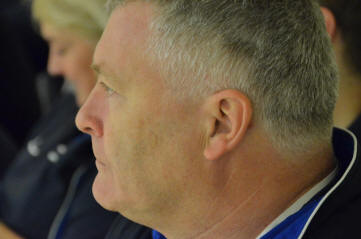 "When
I look at young players, I always look for the usual "speed kills"
and other characteristics, but also for the "cute ones" "When
I look at young players, I always look for the usual "speed kills"
and other characteristics, but also for the "cute ones"
[note for
the non UK readers, meaning kids that are a bit cheeky in the sense
they are trying different things with the ball, don’t play really by
the book].
"But of course, to be gifted is not enough, and as their career
advances, discipline and work ethics play a big role at a latter
stage." |
Multi talented
Although he is thinks he is not that special, that all athletes want to excel in everything they do, and that’s why he
likes doing things to the best of his abilities at all times, Roger
also does a lot of "little things" like building houses, making
furniture, and oh yes, was about to forget, he was initially a
systems analyst, where he gets his "lateral thinking" from.
 "It’s
not so much about solving problems than actually knowing that there
is an answer. And it applies to coaching. It’s all about optimising
natural abilities. "It’s
not so much about solving problems than actually knowing that there
is an answer. And it applies to coaching. It’s all about optimising
natural abilities.
"For example, you have a player, with qualities. let’s compare it to
cooking - you have some ingredients, and you try to make the best
pie, a perfect pie. Then you have another player, with other ingredients,
with whom you are also going to try and make the perfect pie. It
will be a different one, but a perfect one too…" |
Commitment to carry out the
plan
For Roger, it’s all about finding a game plan for his player,
and making sure that they trust him enough to apply it.
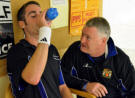 "It’s
about looking in their eye when they get on court, and seeing the face
of someone who believes that he can win, because he trusts the
game plan you gave him. ‘Trust the plan’… "It’s
about looking in their eye when they get on court, and seeing the face
of someone who believes that he can win, because he trusts the
game plan you gave him. ‘Trust the plan’…
"And it’s that smile they give you when they win, telling you that
they were right to trust you. That’s what coaching is all about." |
Dealing with defeat
Difficult to deal with the rush of emotions that spread through
a player’s veins when defeat strikes.
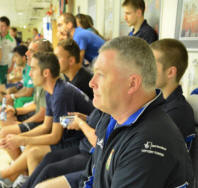 "Everyone
is different in reacting after a defeat, but one common point all
the top athletes share is the hatred of losing. People talk about the will
to win, that’s rubbish, they just loathe losing. "Everyone
is different in reacting after a defeat, but one common point all
the top athletes share is the hatred of losing. People talk about the will
to win, that’s rubbish, they just loathe losing.
"So, how to come to terms with defeat? First, if you are not
prepared to lose, don’t play. But that doesn’t stop you from hating
it…
"You need to give your player the motivation of not having to deal with
it again, and getting him to the point where he can rationalise
thing in his mind. The time it takes to get him to that point can
vary, of course.
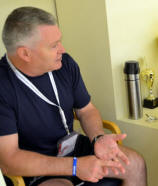 "Some
players, you can talk to them right after, and look at the points
that went wrong, didn’t follow the game plan, not patient enough,
etc. And he’ll think, OK, next time, I’ll have to do this, not do
that, etc. "Some
players, you can talk to them right after, and look at the points
that went wrong, didn’t follow the game plan, not patient enough,
etc. And he’ll think, OK, next time, I’ll have to do this, not do
that, etc.
"Other players, it takes more time for them to get over their
emotions. Then you have to find an explanation, you can use
statistics, videos, talk, or just draw the answers out of them." |
Best and worst about
coaching
"The best moment for a coach is when
your player, the underdog, wins a match he/she wasn’t expected to
win.
The worst is of course the reverse"… |
 |
They said...
A German Volunteer, to Thierry Lincou, as he was
talking in French to me:
|
"Aren't you that Ukraine
Player?....." |
|
|
ENGLAND
David Campion

David is famous in the world as the
English Assistant Coach, but he is of course also James
Willstrop's half brother, and Malcolm Willstrop's step son.

But.
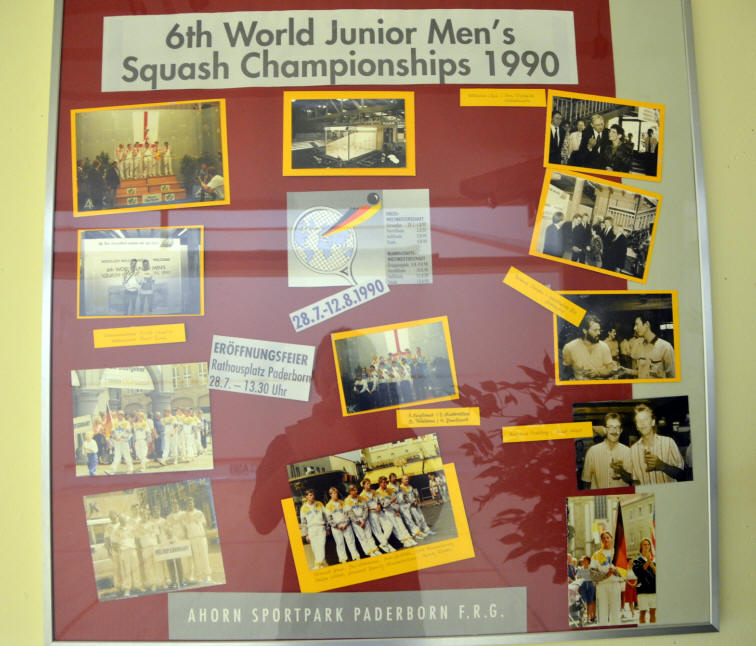
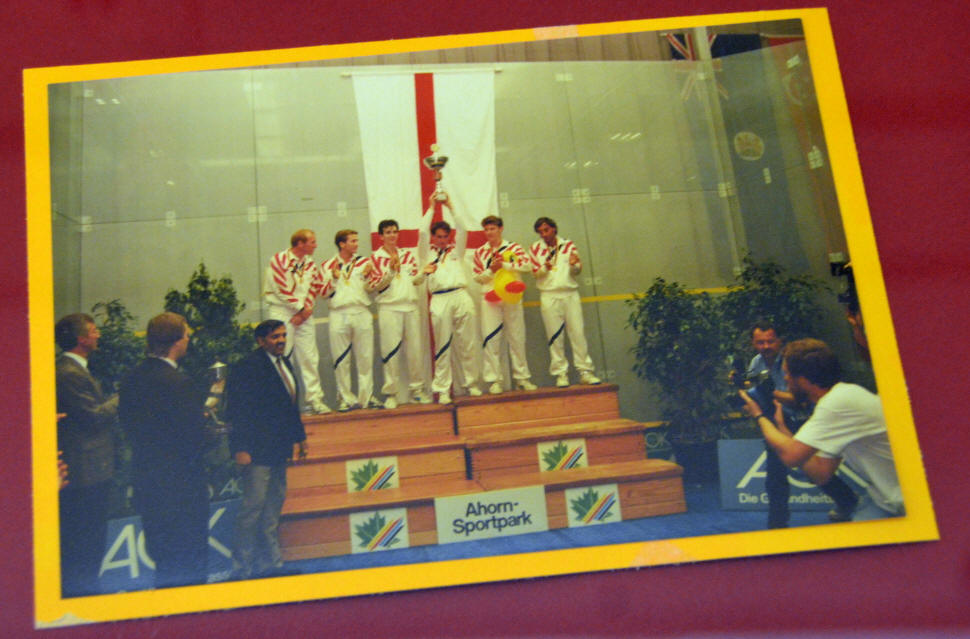
You, the young generation, were you aware that he was here in
1990, in Paderborn, and that he was the runner up against Simon
Parke in the individual Junior finals – that was the
last time a nation provided all four semi-finalists (until Egypt in Herentals this year).
Also, he had to play the deciding tie in the final of the Team
Event against John Williams (who was at the time
representing Australia, and now still plays for Switzerland at 39).
At the time, Jonah Barrington was coaching the England
Team, and a few years back, predicted that a team of Simon
Parke, David Campion and Peter Marshall (who unfortunately
was two months too old to participate to that event) would bring
the World Championship title to England.
On that occasion, Jonah thought it would be in the best interest
of David Campion to let Malcolm coach him. And apparently,
that was an excellent move.
"I was so nervous, so nervous, so much
pressure on me, I didn’t want to disappoint Jonah, I didn’t want to
break his dream.
"But when I saw Malcolm, a bit scruffy as he can be, very calm,
looking his normal self, business as usual, it suddenly put
everything into perspective, and my nerves seem to vanish." |
And the rest is history, of course, as
England won the title thanks to Campion’s victory over Williams…
 |
EGYPT
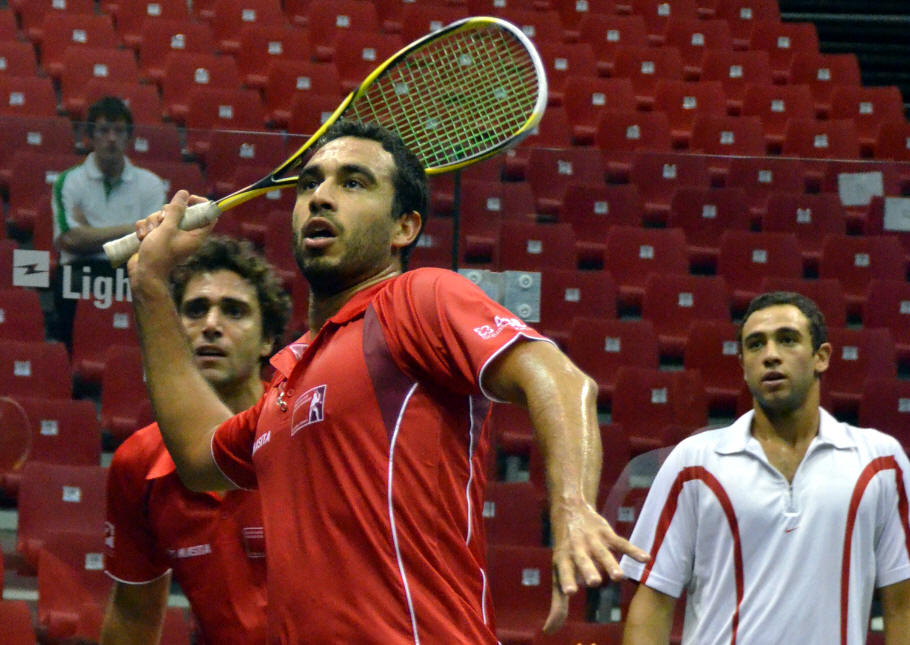
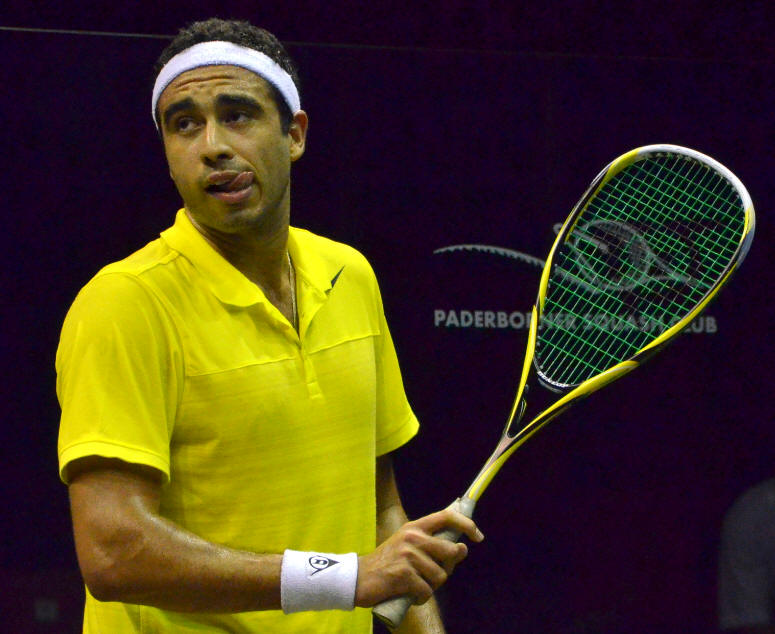
Hisham
Ashour
First ever selection for Ramy's older brother, as Shabana
stepped down from the Team. But how did it happen? And what
does it mean for Hisham to play for Egypt...

My last tournament - I actually won it - was in Montreal in March.
After that, I had the longest off season ever. I kept on thinking it
was going to end, and it never did...
I went from the Cayman Islands to Greece to Hong Kong, and much much
more, I only got back in training like 20 days before the Malaysian
Open.
So I worked hard, and was not perfect for it, but going up the
ladder slowly slowly, thinking I have plenty of time before the next
tournament.
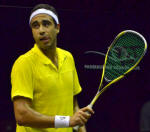 Suddenly,
I get the call telling me that I’m now going to play for Egypt, so I
climb the stairs veeeeeeery quickly now, I’m like a student to who
you say, your exams are tomorrow! You get the books out, and study
hard, very hard, because the last thing I want is to look ridiculous. Suddenly,
I get the call telling me that I’m now going to play for Egypt, so I
climb the stairs veeeeeeery quickly now, I’m like a student to who
you say, your exams are tomorrow! You get the books out, and study
hard, very hard, because the last thing I want is to look ridiculous.
That was about three weeks before the World Teams, and I’m happy, I’m
back to the level I was playing before the off season.
Now I’m here, I’m 100% focused on all of my matches, I want to win
them all, I wish I could play the semis and the final, I wish I
could get the title for Egypt, that’s how strongly I feel about this
event.
My time is now, I’m 30, so it’s about time that I get up in the
ranking, I'm hoping to reach 5/6 in the world.... |
|
|

 |
|
 |
They said...
Paul Assiante (US Coach), watching the Egyptians
practising up on the glass court:
|

"I'm watching, I'm learning.
Thirty-five years in the business, and I'm still learning, every
day..." |
|
|